
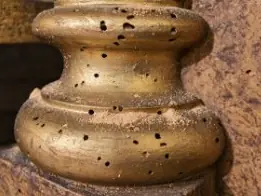
Holes in the wood
Round or oval exit holes of 1–10 mm on the surface. Fresh holes have pale, sharp edges.
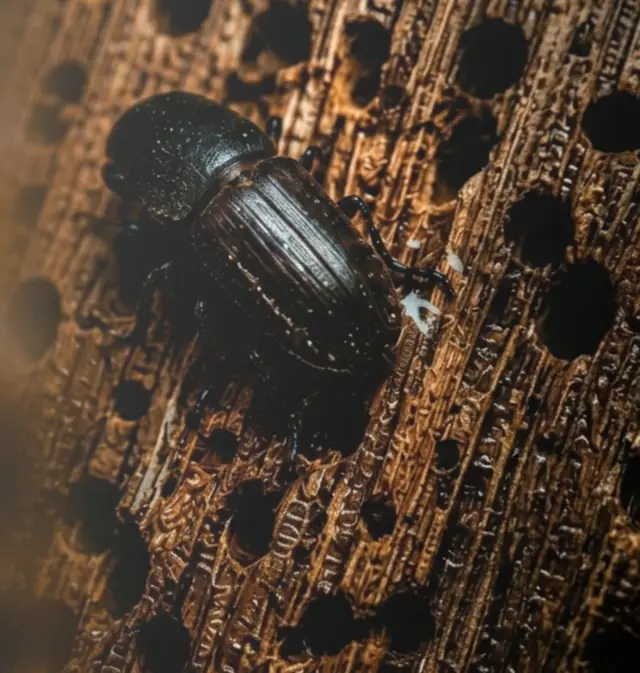
Holes, frass or ticking in your beams? Woodworm feeds for years before the damage shows. We stop it – with an expert survey, a treatment chosen for your timber and up to a 10-year guarantee.
Up to 3 photos – attached to your enquiry automatically.
Larvae feed inside the timber for years before anything shows on the surface. By the time holes appear, the damage is already in the structure.
A beam can look intact from outside while its load-bearing capacity drops year after year.
Every spring new beetles emerge and lay eggs in more timber – roof, floors and furniture.
What is a targeted treatment today can mean replacing beams tomorrow. Woodworm damage also lowers property value when selling.
The good news: caught in time, woodworm can be eliminated safely and permanently – often without chemicals or dismantling, with up to a 10-year guarantee.
Holes in the wood, dust falling from a beam, or a ticking sound? Learn the key traces of wood-boring insects and get help with the next step.
Round or oval exit holes of 1–10 mm on the surface. Fresh holes have pale, sharp edges.

Faint gnawing or tapping inside the structure, mostly audible in quiet evenings.
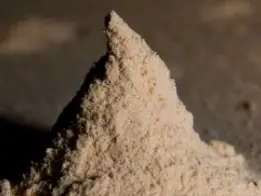
Fine, flour-like or granular bore dust in small heaps below the timber.
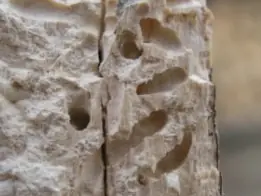
Larvae bore galleries inside the timber while the surface can still look intact.
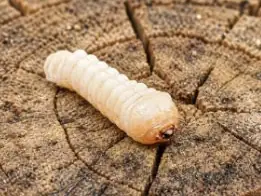
Adult beetles on windowsills, or white larvae when the wood is opened.
A sound alone does not prove an active infestation – an expert inspection gives the full picture.
We choose the method based on the pest, the timber and access. Open “Details” on any card for a full description.
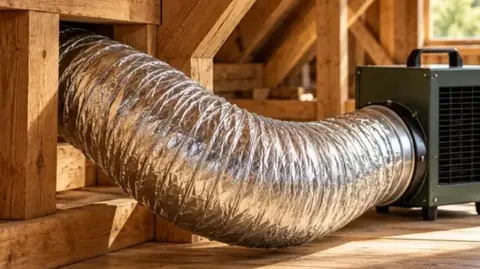
Controlled heating with verified heat penetration into the core of the timber.
In hot air treatment we heat the enclosed space and the timber in a controlled way until even the innermost point of the wood reaches a temperature lethal to insects. It kills eggs, larvae, pupae and adult beetles alike.
How does it work? Heaters and insulated ducts deliver hot air into the sealed area. Core temperature sensors continuously monitor the inside of the timber: the treatment is successful when the centre of the thickest cross-section reaches at least 55 °C and holds it for at least one hour.
When do we recommend it?
Advantages
Things to consider It does not prevent re-infestation on its own, so we combine it with preventive surface treatment when needed. Heat-sensitive materials must be protected beforehand.
Duration: Typically 1–2 days, depending on cross-section and room size.
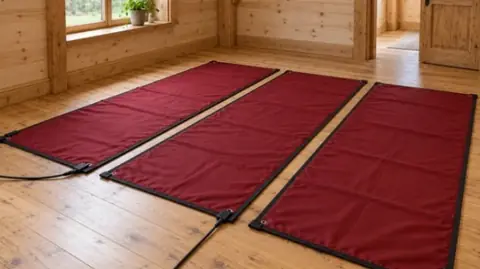
Targeted local heat treatment of accessible timber elements.
Infrared panel heating warms the timber element directly with radiant heat. It is ideal when only a few elements are affected and there is no need to heat the whole space.
How does it work? Panels are placed on or fixed to the infested surface and the heat is conducted into the wood. Core temperature measurement confirms that the whole cross-section reaches the required temperature.
When do we recommend it?
Advantages
Things to consider Only for accessible surfaces; for thick, concealed structures another method may be more effective.
Duration: A few hours per element, depending on thickness.
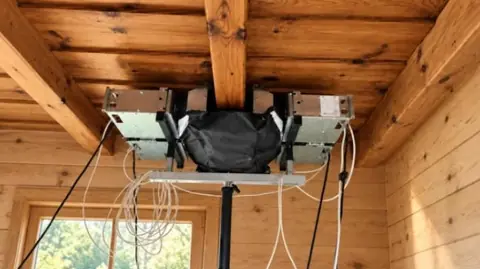
Controlled treatment using the heating effect of microwave energy.
Microwave treatment heats the moisture in the wood and the insects’ body fluids from within. Heat is generated exactly where the larvae are – even in beam ends embedded in walls or ceilings.
How does it work? A trained operator directs the microwave antenna at the infested section while continuously measuring surface and core temperature to avoid damaging the timber.
When do we recommend it?
Advantages
Things to consider Requires care near metal parts and cables; on large areas it may be slower than hot air.
Duration: Short cycles per section, a few hours to a few days in total.
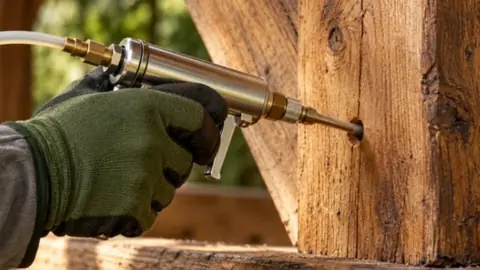
Targeted delivery of preservative through prepared boreholes.
For injection we drill holes into the timber in a defined pattern, then inject an approved wood preservative under pressure deep into the wood.
How does it work? Valves are fitted into the holes and the product is delivered deep into the cross-section where larvae feed. After treatment the holes are sealed.
When do we recommend it?
Advantages
Things to consider Only with approved biocidal products and in compliance with safety and environmental rules. Boreholes leave visible marks.
Duration: 1–3 days depending on the structure.
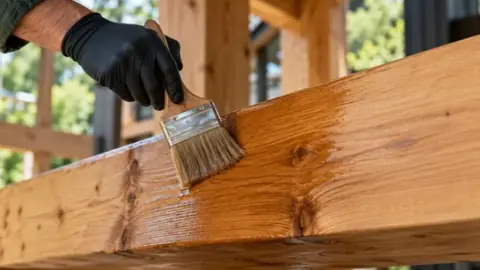
Curative or preventive surface treatment with the appropriate product.
In chemical woodworm treatment an approved preservative is applied to the surface (by spraying or brushing). It penetrates the wood, eliminates the infestation and prevents new egg-laying.
How does it work? We prepare the surface (dust removal, opening up if necessary) and apply the product in several coats at the rate specified by the manufacturer.
When do we recommend it?
Advantages
Things to consider In living areas it may require ventilation and temporary restrictions; the product only acts to its penetration depth.
Duration: Usually 1 day plus drying time.
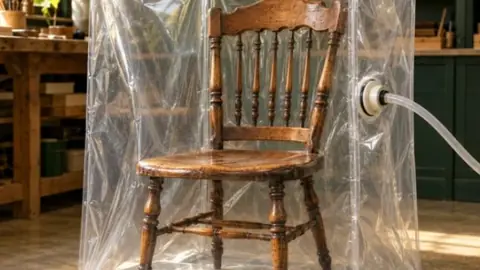
Treatment of enclosable objects in a controlled, low-oxygen environment.
Oxygen deprivation (anoxic) treatment is a gentle way to disinfest particularly valuable objects that are sensitive to heat or chemicals. The object is sealed in a gas-tight enclosure and almost all oxygen is removed.
How does it work? Using nitrogen or oxygen absorbers we reduce oxygen below 0.1% and maintain it for several weeks depending on temperature, with continuous monitoring.
When do we recommend it?
Advantages
Things to consider Longer treatment time; only for objects that can be enclosed, not for built-in structures.
Duration: Typically 3–6 weeks depending on temperature.
Woodworm treatment means eliminating the larvae and beetles of wood-boring insects such as the house longhorn beetle, furniture beetle and powderpost beetle. Every treatment starts with an inspection: we identify the pest, assess the extent of infestation and only then choose a method.
We treat roof structures, beams, timber floors, parquet, stairs, windows and doors, antique furniture and heritage timber for private and commercial clients in Budapest and across Hungary.
Based on 31 genuine client reviews. A few of them:
„Kiváló szakember! A faipari mérnök rendkívül alapos és precíz munkát végzett a tetőszerkezetünk átvizsgálása során, miután cincérkártevő okozott fertőzést. …”
„László kiváló szakember, és emberileg is messzemenően korrekt. A készített jegyzőkönyv rendkívül tartalmas, és precíz mérnöki munka eredménye. …”
„Papp Laci szimpatikus, segítőkész, felkészült szakember. Jó kommunikáció, pontos érkezés, szakszerű munkavégzés. Ajánlom.”
„Izgalmas tetőfelmérésen, jegyzőkönyvezésen és szakvéleményen vagyunk túl. Alapos összefoglaló és útmutató lett, ami alapján rendbe lett téve a tetőszerkezet.”
„Telefonon beszéltünk Lászlóval, elmondtam, hogy mit tapasztaltam az egyik szarufán. A távolságra való tekintettel ellátott sok hasznos tanáccsal …”
„Társasházkezelőként több társasház faanyagvédelmi szakvéleményét készíttettem el Lászlóval. Minden alkalommal készséges volt, gyorsan és egyértelműen …”
Original reviews in Hungarian.
01Document fresh traces and the affected timber elements.
 02
In the first call we discuss the symptoms and the next step.
03A close-up with scale (e.g. next to a coin) and a wider shot of the structure.
04Date, scope and terms of the survey are agreed in advance.
05Based on the inspection we prepare a treatment plan and quote for your timber.
06We treat according to the approved plan and recommend preventive protection.
László Papp is the timber protection expert of faProtekt. For more than 25 years he has inspected timber structures and protected them against wood-boring insects and fungi for private, industrial and heritage clients.
The faProtekt approach is simple: proper protection begins with understanding the condition of the timber. Every treatment is preceded by an inspection – we identify the pest, assess the extent of infestation and the condition of the structure, and only then recommend a technology.
László Papp on FacebookFull faProtekt services: faprotekt.hu
Depending on the treatment method and accessibility. The guarantee period and terms for your timber are set out in the individual quote.
The guarantee covers the treated timber elements and the pest named in the quote. It requires normal use of the structure, prevention of leaks and persistent dampness, and consultation before any later alterations. In case of a guarantee claim we inspect the reported area free of charge.
Fresh exit holes with pale edges, freshly falling light-coloured frass and adult beetles appearing in spring and summer indicate an active infestation. Old, dark-edged holes may be traces of a past infestation – an on-site inspection clarifies this.
With heat treatment (hot air, infrared panels, microwave) most built-in timber structures can be treated without chemicals if the whole cross-section can be heated. For enclosable objects, oxygen deprivation is also chemical-free.
The price depends on the amount of timber (m² or m³), accessibility, the chosen technology, the extent of infestation and any preventive protection required. We give an exact quote after the survey; you can request preliminary guidance from photos.
The first consultation (by phone or from photos) is free. The terms of an on-site survey depend on location and scope and are agreed transparently in advance.
The guarantee period depends on the treatment method, the condition of the timber and whether preventive protection is added. The period and terms are set out in writing in the individual quote.
After treatment we recommend preventive surface protection, reducing moisture (ventilation, fixing leaks) and keeping firewood and wood with bark away from built-in timber. An annual check for fresh traces is advisable.
We work in Budapest and throughout Hungary in family homes, apartment buildings, industrial and listed buildings. The first consultation by phone or photo is free; on-site surveys are arranged in advance.
Show us the symptoms and tell us where the damage appeared. The free first consultation helps clarify inspection and treatment options – including the guarantee.
We reply within 1 business day. Survey, work and guarantee terms are agreed in advance.
We use cookies necessary for the website to work. With your consent we also use statistics and marketing cookies to improve the site and measure our ads. Cookie Policy · Privacy